The thermostat in your Anaheim office reads 78°F and the AC is already losing. Outside it’s 104°F, the third day of a Santa Ana-driven heat wave, and the water cooler in the break room has been empty since 10:40 a.m. Someone put a sticky note on it. Someone else drove to the corner market and expensed a case of plastic bottles. By 2 p.m., half your team is running on iced coffee and stubbornness.
Southern California businesses plan for a lot of things. Summer hydration usually isn’t one of them — right up until the week it becomes the only thing anyone talks about. This is the plan you build before that week, not during it.
Heat makes hydration a workplace requirement, not a perk
California is one of the few states with a specific heat illness prevention standard for employers, and drinking water sits at the center of it. Cal/OSHA’s rules require employers to provide potable drinking water that is fresh, pure, and suitably cool — free of charge — in enough quantity to allow each employee to drink at least one quart per hour. California also adopted an indoor heat illness prevention standard in 2024 covering most indoor workplaces once temperatures climb into the 80s, which sweeps in warehouses, gyms, kitchens, back offices, and any building where the HVAC gives up in August.
Read that quart-per-hour figure again, because it reframes the whole problem. One quart per employee per hour is 32 ounces. Across a 20-person team on an eight-hour day, that’s a theoretical ceiling of 40 gallons. Real consumption is far lower — most offices land somewhere between half a gallon and a gallon per person per day in hot weather — but even the conservative number tells you something uncomfortable about the five-gallon jug in the corner.
The five-gallon math nobody runs until July
Here is the arithmetic that quietly breaks bottled water delivery every summer in Orange County, Los Angeles, and the Inland Empire:
- A 30-person office in mild weather drinks roughly 15 gallons a day — three jugs, or about 15 jugs a week.
- The same office during a heat wave can push past 25 gallons a day. That’s five jugs daily, 25 a week.
- Your delivery schedule didn’t change. It’s still every two weeks, still the same standing order placed when someone signed the contract in February.
- So you run out on a Wednesday — and the emergency delivery, if you can get one, arrives Friday at a surcharge.
- Meanwhile someone is lifting 42 pounds of water onto a cooler, repeatedly, in a hot building. That is its own workers’ comp conversation.
Bottled delivery is a fixed-supply system meeting a variable-demand problem. It works fine in November. In July it fails in exactly the week you need it most, and it fails loudly, because everyone can see the empty jug.
What a bottleless system actually changes
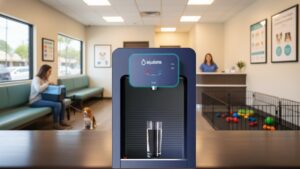
A bottleless dispenser connects to the water line your building already has and filters on demand. Supply stops being a scheduling problem and becomes a plumbing fact. Twenty gallons on Tuesday and forty on Wednesday cost the same and require nothing from anyone.
Aqualume runs every drop through 7-stage filtration — sediment and carbon pre-filtration, reverse osmosis, post-carbon polishing, and UV sanitation — so what comes out of the tap-fed line tastes nothing like what goes into it. That matters more than it sounds. Southern California water is famously hard, heavy on dissolved minerals from Colorado River and State Water Project supply, and people who don’t like the taste of their office water simply don’t drink it. During a heat wave, “the water tastes like a pool” becomes a hydration problem with a payroll cost attached.
The other thing that changes is cold-water recovery. A dispenser that serves four cold glasses and then goes lukewarm for twenty minutes is functionally useless at 2 p.m. in Riverside. Chilled-tank capacity is the spec that separates a machine that survives August from one that gets a passive-aggressive email thread of its own.
Sizing the system for your worst week, not your average one
The mistake is sizing for a Tuesday in March. Size for the second Thursday of a September heat wave, when the AC is struggling and nobody wants to leave the building. A rough working guide for SoCal businesses:
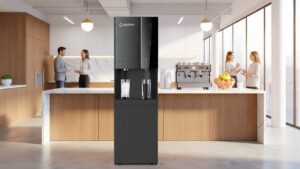
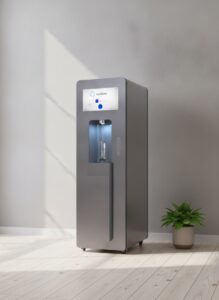
- Under 15 people, one gathering point: the Jetstream tabletop unit fits a counter in a small break room without giving up floor space.
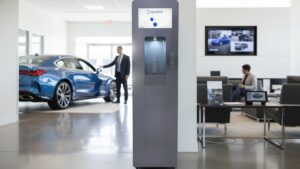
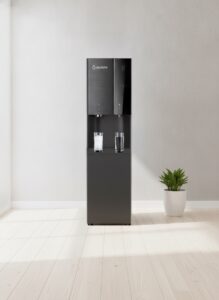
- 15 to 50 people: the Cascade — our best-seller — is the freestanding workhorse for a single-suite office, clinic, or studio.
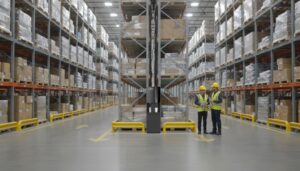
- 50+ people, or anywhere ice matters: the Glacier flagship, which handles heavy draw and adds ice for gyms, warehouses, and medical offices.
- Multiple floors or wings: stop thinking in units and start thinking in walking distance. A dispenser people have to hunt for is a dispenser people skip. Two smaller machines beat one large one placed inconveniently.
Our line also includes the Avalanche, Gulfstream, and Blizzard for configurations that don’t fit the three profiles above — different footprints, different draw rates, same filtration.
What it costs to stop worrying about this
Aqualume service starts at $80 per month per dispenser and runs to about $150 per month for the Glacier flagship. That’s all-inclusive: the machine, installation, filter changes, sanitization, and service calls. There is no per-gallon meter and no summer surge, which is the entire point — the month your team drinks the most is the month your invoice doesn’t move.
Most Southern California businesses we work with save between $1,000 and $3,000 a year versus bottled delivery, and the gap widens in hot years because bottled costs scale with consumption and ours doesn’t. Service runs on a 36-month term, so it’s worth sizing correctly the first time — which is what the 7-day free trial is for.
The plastic problem gets worse in summer, too
Every heat wave that ends with someone expensing cases of single-serve bottles adds a few hundred plastic containers to the waste stream — from an office that probably has a sustainability line in its employee handbook. A 30-person team that switches from single-serve bottles to a bottleless dispenser and reusable cups keeps thousands of plastic bottles out of circulation annually, plus the diesel from a delivery truck that no longer routes to your parking lot twice a month.
In a region that has spent decades legislating around water scarcity and plastic waste, “we stopped trucking water in bottles across the 91” is a genuinely good line to have in your ESG summary.
Frequently asked questions
How much drinking water does a Southern California office need per employee?
Plan for roughly half a gallon to one gallon per employee per day in hot weather. Cal/OSHA’s heat illness prevention rules require employers to be able to supply at least one quart of fresh, suitably cool drinking water per employee per hour, free of charge, so your system should be able to meet peak demand rather than average demand.
Can a bottleless dispenser keep up during a heat wave?
Yes — that’s its main structural advantage. A bottleless system draws from your building’s water line, so supply doesn’t run out mid-week the way a fixed delivery of five-gallon jugs does. The practical limit is chilled-tank recovery rate, not supply, which is why sizing the unit to your peak headcount matters.
What does Aqualume’s bottleless water service cost?
Plans start at $80 per month per dispenser and go up to about $150 per month for the Glacier flagship. The rate is all-inclusive — equipment, installation, filter replacement, sanitization, and service — and it does not change based on how much water your team drinks. Service is provided on a 36-month term.
Does filtration change how hard Southern California tap water tastes?
Substantially. Aqualume’s 7-stage process includes sediment and carbon pre-filtration, reverse osmosis, post-carbon polishing, and UV sanitation, which removes the dissolved minerals and chlorine byproducts responsible for the mineral or “pool water” taste common in SoCal municipal supply. Taste matters practically: employees drink more water when they like it.
Which Aqualume dispenser is right for my business size?
Under about 15 employees, the Jetstream tabletop unit works well. For 15 to 50 employees, the Cascade freestanding model is the most common choice. For larger teams or any facility where ice is useful — gyms, warehouses, medical and senior-care settings — the Glacier flagship is the right size. The Avalanche, Gulfstream, and Blizzard cover configurations in between.
Where does Aqualume install?
Throughout Southern California — Orange County, Los Angeles, and the Inland Empire — serving offices, gyms, schools, clinics, warehouses, and senior-care facilities, typically in the 10-to-100-employee range.
Build the plan before the forecast does it for you
The next triple-digit stretch is coming, and it will find whatever gap exists between what your team drinks and what your break room can deliver. Fixing that in June costs a phone call. Fixing it in the middle of a heat wave costs surcharges, sticky notes, and a team that spent the afternoon underhydrated.
Start your 7-day free trial and put a properly sized dispenser in your break room before the thermometer makes the decision for you.