Water Cooler Rental vs. Purchase: A Strategic Guide for LA Business

Comparing your options? See bottleless water dispensers for Southern California offices or get details on Santa Monica water dispenser service — no jugs involved.
Water is the lifeblood of a productive workplace. In a city known for its wellness culture, providing high-quality, purified water is no longer a perk; it is an expectation. Yet, the method of delivery varies significantly in cost structure and responsibility. Traditional bottled delivery services are rapidly being replaced by bottleless (point-of-use) systems, which filter existing building water.
This guide introduces the “LA Business Agility & TCO Optimization” framework. We will move beyond simple price tag comparisons to analyze how capital allocation, risk management, and service flexibility should drive your decision-making process. Whether you are running a lean startup in Silicon Beach or managing a legacy firm in Century City, this roadmap will clarify your path.
The Vital Role of Hydration in LA Workplaces
Los Angeles is unique. The climate, the commute-heavy lifestyle, and the competitive talent market drive a need for superior workplace amenities. Dehydrated employees are less productive, more prone to fatigue, and more susceptible to the afternoon slump. A readily available, high-quality water solution is the foundational tier of employee wellness.
However, the logistics of providing this water have evolved. The days of storing heavy, plastic 5-gallon jugs in a cramped storage closet are fading. Space in LA commercial real estate is at a premium; dedicating square footage to plastic bottle storage is an inefficient use of capital.
Beyond the Basics: Why “Bottleless” is the Modern Choice
Bottleless water coolers, also known as Point-of-Use (POU) machines, plumb directly into your building’s water line. They purify the water on-site, providing an unlimited supply without the logistical nightmare of delivery schedules or heavy lifting.
- Hygiene: Closed systems reduce the risk of airborne contamination associated with open-top jugs.
- Security: No outside delivery personnel walking through sensitive office areas.
- Efficiency: Fixed costs replace the variable costs of fluctuating water consumption.
For the modern LA facility manager, the question is no longer “bottled vs. bottleless,” but rather the financial vehicle used to acquire the technology: lease or buy?

Understanding bottleless water coolers: A Prerequisite
Before diving into the financials, it is crucial to understand the asset itself. A bottleless water cooler is not just a dispenser; it is a miniature water treatment plant. These machines utilize advanced filtration technologies, such as Reverse Osmosis (RO) or Carbon Block filtration, to remove contaminants common in municipal water supplies.
In the context of Los Angeles, where municipal water hardness and taste can vary by neighborhood—from the Valley to the Westside—filtration is essential. These units often include UV sanitization to keep the dispensing nozzle sterile, a critical feature for high-traffic B2B environments.
Types of Systems:
- Countertop Units: Ideal for breakrooms with limited floor space.
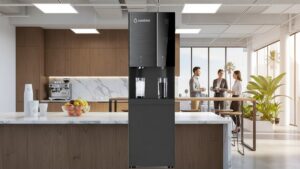
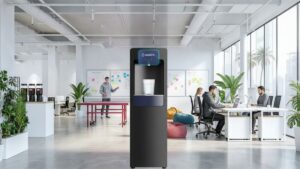
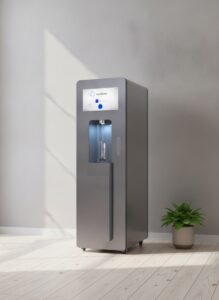
- Freestanding Towers: The standard for corridors and reception areas.
- High-Capacity Chillers: Designed for warehouses or large cafeterias.
The “LA Business Agility & TCO Optimization” Framework
To make a truly informed decision, we must apply a strategic lens. We define this as the “LA Business Agility & TCO Optimization” framework. This approach prioritizes two main factors: the total lifetime cost of the machine (including invisible costs) and the ability of your business to pivot quickly.
Defining Total Cost of Ownership (TCO)
TCO is not just the sticker price. It includes installation fees, filter replacements (typically every 6-12 months), sanitization labor, repairs, parts, and the administrative time spent managing these tasks. In a purchase model, you own all of these liabilities.
Operational Flexibility
LA businesses are dynamic. A startup might double its headcount in six months and move from a co-working space in Venice to a dedicated floor in Culver City. A production company might have a project-based need for six months and then downsize. Your hydration solution must match this velocity. Does owning a heavy appliance hinder your mobility?

Deep Dive: Analyzing the Financials of a Water Cooler Rental
The rental model, often referred to as a “water dispenser lease,” operates on an OpEx (Operating Expense) basis. You pay a fixed monthly fee that typically covers the equipment, installation, and all ongoing maintenance. This model is the dominant choice for B2B environments due to its predictability.
Financial Mechanics of Renting
In a rental agreement, there is usually zero or very low upfront cost. The monthly fee is a flat monthly rate. This simplifies budgeting for facility managers, as there are no surprise repair bills. If the compressor fails in year three, the provider replaces the machine at no cost to you.
Advantages for LA Businesses
- Capital Preservation: Keep your cash in the bank for core business investments, like marketing or hiring.
- Predictable OpEx: A flat monthly fee aids in precise annual budgeting.
- Maintenance Included: Providers like Aqualume handle filter changes and repairs, removing the burden from your staff.
- Technology Refresh: At the end of the term, you can upgrade to the latest model with better filtration or energy efficiency.
Ideal Scenarios for Renting
Renting is ideal for high-growth companies, businesses with limited capital for non-core assets, and organizations that prioritize convenience over asset ownership. If your office manager is already stretched thin, outsourcing the maintenance via a rental is a strategic operational win.
Deep Dive: Purchase Model – Asset Ownership & Long-Term Value
Purchasing a machine is a CapEx (Capital Expenditure) play. You pay a significant lump sum upfront to own the equipment outright. While this eliminates the monthly invoice, it introduces variable costs for maintenance and parts.
Financial Mechanics of Purchasing
The initial outlay for a commercial-grade bottleless cooler can range from $400 to over $1,500 depending on capacity and filtration technology. Once purchased, the asset depreciates. While you may be able to claim tax deductions (such as Section 179), you are also responsible for the asset’s lifecycle management.
Advantages for LA Businesses
- Asset Equity: You own the hardware.
- No Monthly Contracts: Once paid, your only ongoing costs are filters and utilities.
- Lower Long-Term TCO (Potentially): If the machine lasts 7+ years with minimal repairs, the total cash outlay may be lower than a cumulative rental fee.
- Total Control: You decide when to service the machine and what parts to use.
Potential Drawbacks
The hidden danger in purchasing is the “risk of ruin” for the appliance. If the cooling system fails outside the warranty period, sourcing a technician in Los Angeles can be expensive (often $150+ per hour for labor). Furthermore, you must track filter schedules manually.

Comparative Financial Analysis: Beyond Monthly Payments
To truly understand the “LA Business Agility” aspect, we must look at the numbers over time. A rental might cost more over a 5-year period in raw dollars, but purchasing carries the risk of expensive repairs that can skew the math.
Scenario Planning: 5-Year Horizon
Let’s look at a hypothetical comparison for a standard office of 25 people in Los Angeles.
| Cost Category | Rental Model (5 Years) | Purchase Model (5 Years) |
|---|---|---|
| Upfront Cost | $0 – $100 (Setup) | $800 – $1,200 (Machine) |
| Monthly Fee | $80 – $150 | $0 |
| Filter Changes | Billed separately (approx. annual) | $100/year ($500 total) |
| Maintenance/Repairs | Included ($0) | Est. $300 – $600 (Risk) |
| Admin Time Cost | Minimal | High (Sourcing parts/labor) |
| Total Estimated Cost | $2,400 – $3,600 | $1,600 – $2,300 + Risk |
Cost Analysis Visualization
Cumulative Spend Over 5 Years
*Note: The purchase bar does not account for catastrophic equipment failure or administrative overhead.
While purchasing appears cheaper on paper, the “Agility” factor favors renting. If your company moves, downsizes, or needs to upgrade technology, the purchased asset becomes a liability. The rental contract offers the flexibility to adapt.
Operational Efficiencies & Agility: The LA Context
Operating a facility in Los Angeles presents specific logistical challenges. Traffic congestion can delay service technicians, and strict building codes in high-rises can complicate installations.
Installation & Setup
In a rental scenario, the provider handles the coordination with building management, insurance certificates (COI), and plumbing connections. For a purchase, you are the project manager. If your office is in a LEED-certified building in Century City, the installation requirements can be rigorous. Rental providers are experts in navigating these bureaucratic hurdles.
Water Quality Reliability
LA water quality varies. Areas like the San Fernando Valley often have harder water than the coastal communities. A rental provider monitors this and adjusts filter types (e.g., adding a scale inhibitor) accordingly. When you purchase, you might not realize you need different filters until the machine clogs with scale.
The Environmental & Social Governance (ESG) Angle
Modern LA brands prioritize sustainability. Employees and clients alike expect eco-friendly practices. Both rental and purchase options of bottleless coolers contribute to this by eliminating plastic waste.
However, the rental model often supports a “Circular Economy.” At the end of a lease, providers refurbish machines for other markets or recycle components responsibly. A purchased machine that breaks often ends up in a landfill if the owner doesn’t have a recycling process in place.
- Plastic Reduction: Saving thousands of bottles annually.
- Carbon Footprint: Removing the delivery trucks from LA’s congested freeways.
- Energy Efficiency: Newer rental units often have “sleep modes” to save power.
Case Studies: Real-World Scenarios for LA Businesses
To illustrate the “LA Business Agility” framework, let’s look at three distinct business profiles.
1. The Rapidly Scaling Tech Startup (Silicon Beach)
The Scenario: A software company in Santa Monica was doubling headcount every six months. They considered purchasing, but capital was needed for development.
The Decision: They opted for a water cooler rental. This allowed them to start with two units and easily add three more as they expanded to a second floor. The fixed monthly cost was negligible compared to their burn rate, and the lack of maintenance distraction allowed their office manager to focus on onboarding new hires.
2. The Established Law Firm (DTLA)
The Scenario: A prestigious law firm with a stable 15-year lease in a downtown high-rise. They had a consistent headcount of 50 partners and staff.
The Decision: They chose to purchase. With a dedicated facilities team already on staff to handle building maintenance, adding water cooler filter changes to the existing workflow was simple. The upfront cost was amortized quickly, providing long-term value.
3. The Hollywood Production Studio
The Scenario: A studio lot needing hydration for temporary production crews that fluctuated wildly in size.
The Decision: A short-term rental agreement. They needed high-capacity machines for 3-month shoots. Purchasing would have left them with idle assets between productions. Renting provided the ultimate agility.
Navigating Vendor Selection in the LA Market
If you decide to rent, or even buy with a service contract, the partner you choose matters. The LA market is flooded with providers, but service levels vary wildly.
- Local Response Time: Ensure your vendor has technicians based in LA, not just dispatching from distant counties. Traffic is a real operational factor.
- SLA Guarantees: Look for a Service Level Agreement that guarantees a fix or replacement within 48 hours.
- Water Dispenser Lease Terms: Read the fine print regarding cancellation. Can you downgrade if your staff reduces?
Look for providers who understand the specific “water solution for business” needs in your specific neighborhood.
Expert Insights: Legal and Financial Perspectives
We spoke with local experts to get their take on the Rent vs. Buy debate.
“From a tax perspective, rental payments are immediately deductible as operating expenses. Section 179 allows for immediate write-offs of purchased equipment, but the cash flow hit is immediate. For startups, preserving cash is usually king.” — Sarah Jenkins, CPA, West LA Business Advisory.
“The biggest mistake I see tenants make is ignoring the ‘make-good’ clauses in their office leases. If you install a plumbed-in unit yourself and cause a leak, you are liable. Professional rental companies carry the insurance to cover this risk.” — Mark Davis, Commercial Real Estate Attorney.
Future-Proofing Your Hydration Strategy
The water cooler industry is innovating. Smart coolers now feature IoT connectivity to track water usage, filter status, and even employee hydration levels.
By renting, you maintain a “Technology Refresh” cycle. Every 3 to 5 years, you can swap your old unit for a new smart cooler without a new capital injection. If you purchase, you are locked into today’s technology for the next decade. In a city like Los Angeles that prides itself on being at the cutting edge, having outdated facility equipment can subtly impact your brand image.
Frequently Asked Questions (FAQs) for LA Business Owners
Q: How long do bottleless water coolers last?
A high-quality commercial unit can last 7-10 years. However, compressors and solenoids can fail earlier. Rentals shift this longevity risk to the provider.
Q: What is the typical ROI for purchasing vs. renting?
The “break-even” point is usually around month 24-30. If you keep the machine for 5 years without major repairs, purchasing offers a higher ROI. If the machine breaks in year 3, renting was the better financial choice.
Q: Are there specific permits needed for installation in LA?
Generally, no permits are needed for a simple connection to an existing water line under a sink. However, drilling through marble countertops or running lines through firewalls in high-rises may require building management approval.
Q: How often do filters need to be changed?
Typically every 6 to 12 months, depending on usage volume and local water sediment levels. Rental agreements include this scheduled service.
Q: Can I switch from rental to purchase later?
Some providers offer “rent-to-own” options, but they are rare in the commercial sector. It is best to decide your strategy upfront.
Conclusion: Making the Strategic Choice for Your LA Business
Deciding on a hydration solution is about more than just thirst; it is about aligning your facility operations with your broader business strategy. The “LA Business Agility & TCO Optimization” framework highlights that while purchasing offers asset ownership and potential long-term savings, the water cooler rental model offers superior flexibility, risk mitigation, and capital preservation—benefits that are often invaluable in the dynamic Los Angeles market.
For established firms with stable footprints and dedicated maintenance teams, purchasing is a viable route to equity. However, for the majority of modern businesses prioritizing agility and predictable expenses, the rental model is the strategic winner. Assess your internal resources, review your capital goals, and choose the path that keeps your team hydrated and your operations streamlined.
Ready to explore a tailored solution? Visit Aqualume to discuss your water cooler rental options today.
Want to see how it fits your space? Compare the Glacier freestanding water and ice dispenser — and the first 7 days are free.