Water Cooler Guide: Bottleless vs. Jugs for Thousand Oaks Offices
Bottleless Water Coolers vs. 5-Gallon Jugs: What’s Best for Thousand Oaks Offices?
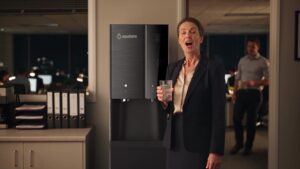
It is a typical Monday morning in the Conejo Valley. The sun is already beating down on the 101 freeway, and your team is arriving at the office parched.
They head to the breakroom, only to find the dispenser empty. Now, someone—perhaps the Office Manager or an unlucky intern—has to wrestle a 42-pound blue cylinder out of the storage closet and heave it onto the machine.
For many businesses in Thousand Oaks, this ritual is a daily annoyance. However, beyond the inconvenience, there are hidden operational costs regarding storage space, workplace safety, and sanitation.
Today, we are comparing the two primary water cooler technologies available to Ventura County facilities. We will analyze which option best fits your corporate culture, facilities budget, and hydration needs.
Deep Dive: Understanding Your Hydration Options
Before making a procurement decision, it is vital to understand the mechanics behind the equipment. Not all dispensers are created equal, especially when serving a busy commercial environment.
Option A: The Traditional 5-Gallon Jug Cooler
This is the system most facilities managers are familiar with. It relies on a gravity-fed mechanism or a bottom-load pump.
While the technology is simple, the logistics are complex. It requires a recurring delivery schedule, significant square footage for storing full and empty bottles, and manual labor to swap units.
Best For: Sites with absolutely no plumbing access, such as temporary construction trailers or remote guard shacks.
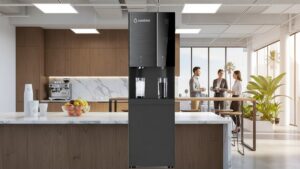
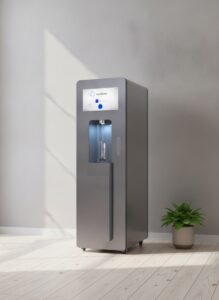
Option B: The bottleless water cooler (Point-of-Use)
Comparing your options? Learn about bottleless water dispensers for Southern California offices or get details on Thousand Oaks water dispenser service.
These units typically employ multi-stage filtration technologies, including carbon block, Reverse Osmosis (RO), and UV sanitization, to purify water immediately before it hits the glass.
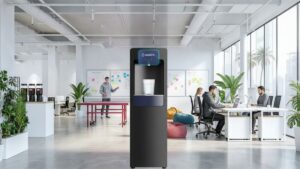
Best For: Offices requiring a fixed monthly cost, high-capacity output, and zero manual lifting.
Expert Analysis: The “T.O.” Factor (Thousand Oaks Specifics)
Managing a facility in Thousand Oaks presents unique challenges compared to other regions. The local climate and water quality play a massive role in which hardware you should choose.
1. The Hard Water Reality in Ventura County
Thousand Oaks municipal water is notoriously hard. If you rely on standard pitchers or basic filters, you likely notice scale buildup on your coffee pots within weeks.
The Client Scenario: The Dental Office & The “TDS” Reality
I recently consulted with a high-end dental practice near Los Robles Hospital. They prided themselves on a sterile environment but were using a standard “big box store” cooler with basic carbon filters in their waiting room.
Within six months, the hot water spigot was sputtering, and the coffee tasted metallic. I brought in a TDS (Total Dissolved Solids) meter—a standard tool for us veterans. Thousand Oaks municipal water often tests between 300-450 ppm (parts per million) due to regional mineral content.
Their basic filter was knocking it down to maybe 350 ppm, which does nothing for scale buildup. We swapped their unit for a commercial bottleless cooler with a dedicated Reverse Osmosis (RO) membrane.
The RO system dropped their TDS to below 30 ppm. The result? The coffee tasted like coffee again, the equipment stopped breaking down, and the patients in the waiting room stopped staring at the calcified drip tray.
Expert Tip: In Ventura County, standard carbon filtration often isn’t enough to protect expensive coffee brewers. You need heavy-duty Reverse Osmosis to combat local hard water.
2. Hygiene & Safety: The “Biofilm” Issue
In a B2B setting, hygiene is paramount. Traditional coolers operate as “open systems.” Every time a bottle is swapped, the reservoir is exposed to airborne contaminants and bacteria from the handler’s hands.
The Data Insight: The “Plastic Soup” Effect on the 101 Freeway
Many office managers assume that because water comes in a sealed blue bottle, it is pristine. But after 20 years in the industry, I look at the logistics chain differently.
I once tracked the temperature logs of a standard water delivery truck running the route from Oxnard through Camarillo up the Conejo Grade to Thousand Oaks. In the summer, the cargo hold of those trucks can easily exceed 110°F.
When water sits in polycarbonate jugs at that heat for hours, you get what industry insiders call “Plastic Soup.” While it may pass basic safety standards, the taste degrades rapidly. In contrast, a bottleless unit filters the water seconds before it hits your glass.
Case Studies: Practical Applications in Local Business
How does this transition look in the real world? Here are two examples of local businesses upgrading their infrastructure.
Scenario A: The Boutique Law Firm (Westlake Village/Thousand Oaks border)
- Challenge: Limited lobby space and a high aesthetic requirement. They were tired of storing ugly blue jugs in the client view.
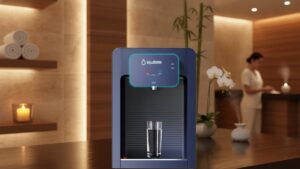
- Solution: We installed a sleek, bottleless water cooler rent package with a glass front panel.
- Outcome: Immediate improvement in client impression and the reclamation of valuable storage closet space.
Scenario B: The Auto Body Shop / Warehouse (Newbury Park)
- Challenge: High volume consumption during summer and dirty hands using the dispenser levers.
- Solution: A rugged business water dispenser with foot pedals and high-capacity filtration.
- Outcome: Eliminated injury risk from lifting jugs; staff stays hydrated during heatwaves without touching the machine.
The “In the Trenches” Story: The Hillcrest Back Injury Scare
Back in 2018, I consulted for a mid-sized accounting firm located in an office park off Hillcrest Drive. They were loyal to the 5-gallon jug model until liability became a reality.
It was a blistering August afternoon, and their delivery driver missed the window. The office manager asked an intern to grab a backup jug. That intern tried to hoist a 42-pound cylinder onto a top-loading cooler while wearing dress shoes. He slipped, dropped the jug, and tweaked his lower back.
We ran the numbers the next day: The potential Workers’ Comp claim and the cost of replacing the water-damaged laminate flooring cost 10x what a year of bottleless service would have been. We switched them to a plumbed-in unit the next week.
Common Myths & Misconceptions
When switching from delivery to a bottleless infrastructure, facility managers often have hesitations. Let’s address the most common myths.
Myth #1: “Bottleless coolers require complex plumbing.”
Truth: Modern units use simple food-grade tubing (similar to a coffee maker connection). They can usually be installed in under 30 minutes without cutting into copper pipes or disrupting office operations.
Myth #2: “Renting is a waste of money.”
Truth: Water cooler rent models are often classified as operational expenses rather than capital expenditures. These packages include maintenance, filter changes, and repairs, which saves administrative time and prevents unexpected repair bills.
Conclusion: Making the Right Choice for Your Team
Choosing the right hydration station is about more than just water; it is about workplace efficiency and employee wellness.
Summary Matrix:
- Choose 5-Gallon if: You are in a temporary trailer with no water access.
- Choose Bottleless if: You have 5+ employees, prioritize hygiene, and want a flat monthly billing cycle.
Don’t let your Thousand Oaks team run dry during the next heatwave. Upgrade your breakroom to a system that saves space, saves backs, and delivers purity on demand.
Planning an upgrade? Compare the Cascade freestanding water and ice cooler — every install starts with a 7-day free trial.