Water and Ice On Demand
Bottleless Water and Ice Dispenser LA: Comprehensive On-Demand Solutions for Offices and Commercial Use
Water and ice on-demand systems deliver chilled water and freshly produced ice directly at the point of use, combining mains-fed filtration, chilling, and ice production into compact dispensers. This article explains what bottleless water and ice dispensers are, how mains-fed filtration and ice heads operate, and why point-of-use hydration stations with ice make sense for offices, hospitality, and healthcare. Many businesses face operational pain points such as single-use plastic waste, unpredictable supply logistics, and hygiene risks from shared bottles; integrated bottleless systems solve these by producing filtered water and the right ice type on-site. Readers will learn system mechanics, hygiene technologies (multi-stage filters, UV-C, antimicrobial surfaces), sector-specific ice recommendations, procurement options (rent, lease, buy), and current trends like IoT monitoring and energy-efficient designs. The guide uses target keywords such as bottleless water cooler with ice, ice and water dispenser, nugget ice dispenser with water, and commercial ice maker with water tap to help procurement teams make informed choices and plan installations that meet capacity, hygiene, and sustainability goals.
What Are Bottleless Water and Ice Dispensers and How Do They Work?
Bottleless water and ice dispensers are mains-fed devices that filter incoming water, chill it, and create ice on demand using an integrated ice head and dispensing interface. The mechanism follows a clear flow: mains supply → multi-stage filtration → chilling loop → ice production head → dispense, which delivers hygienic water and ice without bottled supply logistics. These systems improve taste and safety while reducing plastic waste and handling overhead, making them practical for offices and commercial spaces. Understanding the core components helps buyers match technical features to use cases and service needs, and the next section breaks down the defining characteristics of bottleless systems.
What Defines a Bottleless Water and Ice Dispenser?
A bottleless water and ice dispenser is defined by its point-of-use, mains-fed architecture combined with on-board filtration and ice-making capability. This contrasts with bottled coolers that rely on transported jugs and separate ice machines that only produce ice; bottleless units integrate both functions into one appliance. The key practical benefits are reduced supply chain dependence, smaller storage footprint, and continuous availability of chilled water and the specified ice type. Knowing these differences makes it easier to choose between a compact countertop dispenser and a commercial ice machine for high-demand settings.
How Does Mains-Fed Filtration Ensure Clean Water and Ice?

Mains-fed filtration relies on multiple stages—sediment pre-filter, activated carbon to remove chlorine and organics, membrane or finer filtration to reduce particulates, and optional UV-C for microbial inactivation—to deliver clean water for drinking and ice production. Each stage targets different contaminants, improving taste and reducing odour while limiting particles that can cloud ice. Scheduled filter replacement intervals and monitoring of differential pressure or flow rates are essential to maintain performance. Proper filtration therefore enhances both water safety and the clarity and taste of produced ice.
Which Types of Ice Can Integrated Dispensers Produce?
Integrated dispensers can produce several ice types, commonly including nugget (chewable), cubed (clear, slow-melting), bullet (compact), and flake (soft, mould-conforming). Nugget ice is prized in beverage service for mouthfeel and rapid cooling, cubed ice is the bar standard for cocktails, and flake ice suits display and medical cooling applications. Ice type selection affects presentation, dilution rate, and storage needs, so matching ice characteristics to service requirements is crucial. The next subsection outlines installation forms that accommodate different ice types and usage patterns.
What Are the Common Installation Types for These Dispensers?
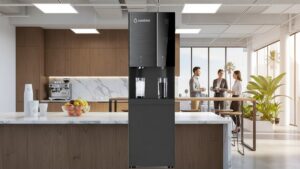
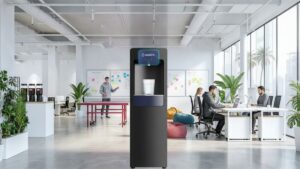
Common installation types include freestanding floor units, countertop models, plumbed-in integrated taps, and bespoke under-counter ice machines paired with a dispenser. Freestanding units offer high capacity and are suited to break rooms, while countertop and integrated taps minimise footprint and fit reception or café environments. Installation considerations include plumbing access, drainage, ventilation, and maintenance accessibility. A simple decision checklist—assess demand, available space, routing for waste/drain, and service access—helps determine the right form factor for each site.
What Are the Key Benefits of Using Water and Ice On-Demand Systems?
Water and ice on-demand systems deliver clear business value through improved hygiene, reduced single-use plastic waste, ongoing cost savings versus bottled supply, and enhanced employee or guest experience. By producing filtered water and the chosen ice type on-site, these systems remove transport and storage inefficiencies and lower infection risk when combined with touchless dispensing and UV sanitisation. Organisations also gain predictable operating costs when service and filter programmes are implemented, which supports procurement and sustainability targets. The following subsections unpack wellness, environmental impact, hygiene technologies, and a worked ROI illustration.
How Do These Systems Improve Office Hydration and Employee Wellness?
On-demand water and ice systems make hydration convenient by placing chilled water and ice within high-traffic zones, which increases consumption and supports concentration and wellbeing. Research and workplace wellness guidance link regular hydration to improved cognitive performance and reduced fatigue, so accessible hydration points contribute to productivity goals. Practical placement—near breakout areas and collaboration zones—plus signage and cup-free options encourage use. These deployment strategies directly support wellness programmes and help measure adoption through usage monitoring.
In What Ways Do Bottleless Dispensers Support Sustainability and Reduce Plastic Waste?
Bottleless dispensers eliminate many single-use plastic bottles by delivering mains-fed filtered water and ice at point of use, which reduces packaging, transport emissions, and supply-chain waste. Lifecycle comparisons show that moving from bottled water to mains-fed stations cuts logistical carbon and plastic footprints substantially, particularly for high-consumption sites. Filter disposal and recycling programmes are important to close the loop, as some filter housings and media can be recycled or returned through supplier initiatives. Reducing single-use packaging also simplifies procurement and storage in constrained office footprints.
How Do Advanced Hygiene Features Like UV Purification and Touchless Operation Enhance Safety?

Advanced hygiene combines multi-stage filtration with UV-C sterilisation, antimicrobial surface materials, and touchless sensors to reduce microbial load and cross-contamination. UV-C placed in the water or ice pathway inactivates bacteria and viruses as a complement to filtration, while antimicrobial coatings on high-touch zones slow surface contamination. Touchless dispensing eliminates hand contact at the point of dispense, lowering transfer risk during peak use. Using these features together creates layered protection that is particularly valuable in healthcare and densely used office settings.
A Touchless Water Dispenser: AI-Powered, Sustainable Hydration Solutions
In recent years, the necessity for contactless and sustainable systems has become increasingly pertinent. Traditional water dispensers, which necessitate physical contact and often employ single-use plastic cups or bottles, are not only unhygienic but also contribute to environmental pollution. This paper introduces a touchless water dispenser system that leverages artificial intelligence (AI) to regulate the dispensing of water or any liquid beverage. The system is engineered to fill a container positioned beneath the nozzle, dispense water when the container is aligned with the flow, and cease dispensing once the container is full, all without requiring any physical interaction. This methodology ensures adherence to hygiene regulations and promotes environmental sustainability by obviating the need for plastic bottles or cups, thereby establishing it as a “plastic-free” and “zero waste” system. The prototype is predicated on a computer vision approach, utilising an RGB camera and a Raspberry Pi board, which facilitates real-time image processing and machine learning operations. The system employs image processing techniques to detect the presence of a container beneath the nozzle and subsequently utilises AI algorithms to govern the liquid flow. The system is trained using machine learning models and optimised to guarantee accuracy and efficiency. We delineate the development and implementation of the touchless water dispenser system, encompassing the hardware and software components utilised, the algorithms employed, and the testing and evaluation of the system. The outcomes of our experiments demonstrate that the touchless water dispenser system exhibits high accuracy and efficiency, and it presents a safe and sustainable alternative to conventional water dispensers. The system possesses the potential for deployment in diverse environments, including public spaces, hospitals, educational institutions, and offices, where hygiene and sustainability are of paramount importance.
A Computer Vision-Based Water Level Monitoring System for Touchless and Sustainable Water Dispensing, M Paolanti, 2023
For organisations considering deployment, suppliers such as Aqualume act as example providers of bottleless water and ice dispensers and can demonstrate combined hygiene and sustainability packages; interested teams can request a quote or demo to assess fit with site needs.
What Cost Savings and ROI Can Businesses Expect from These Systems?
Cost savings arise from reducing bottled-water purchases, lowering transport/storage overhead, and gaining predictable service costs for filters and sanitisation. For a simple worked illustration, assume a 50-person office replacing weekly bottled deliveries: eliminating delivery costs and bottle disposal typically returns cross-over savings within 12–36 months depending on usage and service fees. Key variables are daily number of servings, filter replacement frequency, energy consumption of the ice head, and whether the unit is rented or purchased. Clarifying these inputs with a supplier provides a realistic ROI timeline for procurement decisions.
Which Types of Commercial Ice and Water Machines Are Available in the UK Market?
Commercial ice and water machines in the UK range from high-capacity modular ice makers to compact integrated bottleless dispensers and countertop units tailored for lower throughput. The main distinction lies in production capacity, duty cycle, and service expectations: industrial ice machines deliver large daily tonnages and require refrigeration-grade service, while integrated dispensers balance water filtration and moderate ice output for consumer-facing hospitality. Selecting the correct class depends on peak service periods and the preferred ice type. The following subsections compare commercial machines, integrated taps, ice-capacity mapping, and market-leading manufacturer categories.
What Distinguishes Commercial Ice and Water Machines from Office Water Coolers?
Commercial ice and water machines prioritise production capacity (kg/day), larger storage bins, and heavy-duty refrigeration components, which supports sustained high-throughput environments such as hotels and banquet kitchens. Office water coolers prioritise compact footprint, mains-fed filtration, and lower duty cycles suitable for periodic beverage service. Commercial units generally have higher maintenance frequency, greater energy draw, and specific service contracts due to refrigeration components. Understanding these distinctions helps buyers align service level agreements and spare-parts availability with operational expectations.
How Do Integrated Water and Ice Taps Differ from Standalone Dispensers?
Integrated water and ice taps combine a compact dispensing spout with a concealed ice head or under-counter ice unit, saving visible footprint and supporting simultaneous chilled-water and ice dispensing. Standalone dispensers consolidate all components into a single unit and can be easier to install but may demand more floor or counter space. Integrated taps suit reception areas and design-conscious hospitality venues, while standalone units better serve back-of-house or dedicated hydration stations. Installation complexity, plumbing routing, and service access are the primary trade-offs when choosing between these approaches.
What Ice Types and Capacities Suit Hospitality Versus Office Environments?
Hospitality venues often need cubed or nugget ice in higher capacities to match bar and beverage demand, typically selecting machines with 50–200+ kg/day production and sizable storage bins. Offices with moderate beverage needs benefit from nugget ice or small cubed outputs around 10–50 kg/day to balance convenience and energy use. Healthcare and display uses may prefer flake ice for handling and presentation, often with continuous production profiles rather than large bins. Matching production rates to peak service windows avoids under- or over-capacity and reduces energy waste.
Which Manufacturers and Brands Lead the UK Market?
The UK market includes global refrigeration and ice specialists alongside office hydration brands and specialist plumbed-in providers, each offering different model ranges and service coverage. Buyers should prioritise suppliers with accessible spare parts, clear service SLAs, and model lines that match required capacity and ice type. Comparing technical specifications, energy ratings, and maintenance networks helps identify the best-fit manufacturer category without relying solely on brand prestige. The next section examines how filtration and sterilisation maintain quality and hygiene in these systems.
| Commercial Machine Type | Typical Ice Type / Capacity | Best Use Cases / Pros & Cons |
|---|---|---|
| Integrated bottleless dispenser | Nugget/Cubed / 10–50 kg/day | Office kitchens, reception areas; low footprint but moderate capacity |
| Standalone commercial ice maker | Cubed/Bullet / 50–500+ kg/day | Hotels, restaurants; high capacity, higher service needs |
| Countertop ice and water unit | Nugget/Small cubed / 5–20 kg/day | Small cafés, break rooms; minimal installation, limited output |
How Do Plumbed-In Ice and Water Dispensers Ensure Water Quality and Hygiene?
Plumbed-in ice and water dispensers combine multi-stage filtration, optional UV-C sterilisation, antimicrobial surfaces, and automated cleaning cycles to maintain water and ice quality at point of use. The filtered mains feed reduces particulates and chemical tastes, UV-C addresses microbial risk in the water/ice path, and surface technologies reduce contact contamination. Self-cleaning functions and scheduled sanitisation support consistent performance and regulatory compliance where required. The following H3 subsections unpack filter stages, UV-C roles, touchless and antimicrobial benefits, and self-cleaning functionality.
What Multi-Stage Filtration Technologies Are Used in Plumbed-In Systems?
Common filtration stacks include sediment pre-filters to remove particulates, activated carbon blocks to reduce chlorine and VOCs, finer membrane or inline filters for micro-contaminant reduction, and sometimes reverse osmosis for high-purity needs. Each stage provides a defined removal mechanism that collectively improves taste, clarity, and safety; for example, carbon improves flavour while membranes reduce suspended solids. Typical replacement intervals range from 3–12 months depending on usage and water quality. Proper monitoring and scheduled servicing ensure filters continue to protect both water and produced ice.
How Does UV Sterilisation Improve Ice and Water Safety?
UV-C sterilisation inactivates bacteria, viruses, and protozoa by damaging microbial DNA and RNA as water or ice surfaces pass the UV chamber, providing an additional hygiene layer beyond filtration. UV is effective when applied to clear, low-turbidity water and is best used as a complementary technology rather than a sole barrier. Validation through dose measurement and regular lamp replacement is necessary to maintain efficacy. Combined with filtration, UV gives procurement teams confidence in microbial control for sensitive environments.
What Are the Hygiene Advantages of Touchless Dispensing and Antimicrobial Surfaces?
Touchless dispensing reduces direct hand contact at the dispense point, lowering cross-contamination risk during heavy use periods. Antimicrobial surface treatments slow biofilm formation and reduce microorganism survival on high-touch surfaces, though they are not a replacement for cleaning. Together, these features reduce behavioural transmission pathways and simplify daily cleanliness routines. In environments with immunocompromised users or high throughput, such layered hygiene measures are particularly important.
How Do Self-Cleaning Functions Maintain Dispenser Performance?
Self-cleaning cycles automate sanitisation of the ice path and water lines using controlled flushes, heated sanitisation, or chemical dosing protocols, reducing the need for frequent manual service. These cycles help prevent scale, biofilm, and ice-head fouling, preserving ice quality and extending service intervals. Operators should verify the scope of automated routines, frequency, and any consumables required, and align them with supplier service plans. Effective self-cleaning reduces downtime and keeps performance consistent between scheduled maintenance visits.
What Features Should You Consider When Choosing a Filtered Water and Ice Machine?
Choosing a filtered water and ice machine requires assessing temperature options, ice type needs, capacity, size, energy efficiency, and warranty/service coverage to balance user experience with total cost of ownership. Features such as hot-water safety locks, sparkling water modules, and standby energy modes influence both usability and running costs. Buyers should examine energy ratings, expected filter life, and spare-parts access when comparing models. The next subsections detail temperature combos, ice impacts, sizing heuristics, and energy/warranty considerations.
Which Temperature Options Are Available: Chilled, Hot, Ambient, Sparkling?
Many dispensers offer chilled and ambient water as standard, with optional hot and sparkling modules for expanded service. Hot water delivery must include safety locks and controlled dispense to prevent scald risk, while sparkling functionality introduces CO₂ supply and additional maintenance. Common combos are chilled+ambient, chilled+hot, or chilled+sparkling depending on workplace needs. Selection should reflect user preferences, safety policies, and the incremental service obligations of carbonation or hot-water subsystems.
How Do Different Ice Types Affect Beverage and Food Service Applications?
Ice type influences dilution rate, presentation, and mouthfeel: nugget ice cools quickly and produces chewable texture ideal for soft drinks, cubed ice offers slow melt for cocktails, and flake ice is soft for display and medical cooling. Choice affects beverage balance—slower-melting cubes preserve drink strength while nugget ice enhances refreshment. In food service, flake ice fits display and chilling delicate produce. Matching ice type to the culinary or beverage outcome improves guest satisfaction and operational flow.
What Capacity and Size Options Fit Small Offices Versus High-Traffic Areas?
For small offices, countertop and low-capacity integrated units (5–30 kg/day) usually suffice, while busy hospitality or healthcare sites require higher-capacity commercial machines (50–500+ kg/day) and larger storage bins. Footprint planning should include clearance for ventilation and service access, and placement near drains simplifies maintenance. A rule of thumb is to estimate peak hourly demand and select a machine whose hourly production meets that peak, then confirm bin storage for short spikes. Proper sizing avoids frequent shortages or unnecessary energy use.
How Important Are Energy Efficiency and Warranty Coverage?
Energy efficiency directly affects running costs, with smart standby modes and efficient compressors reducing daily consumption. Look for models with clear energy metrics and demand-based operation to minimise waste during low-use periods. Warranty coverage and service SLAs influence TCO by defining response times, included consumables, and any exclusions such as accidental damage or scale-related faults. Prioritising models with comprehensive warranty terms and accessible service networks reduces long-term risk and simplifies budgeting.
| Feature | Typical Specification | Benefit / Impact |
|---|---|---|
| Filtration stages | Sediment + Carbon + Membrane/RO | Improves taste, reduces particulates; impacts maintenance schedule |
| Temperature options | Chilled / Hot / Sparkling combos | Expands service but increases maintenance and safety requirements |
| Energy-saving modes | Standby scheduling / IoT control | Lowers running costs and carbon footprint |
How Do Rental, Purchase, and Lease Options Compare for Water and Ice Dispensers?
Acquisition choices—rent, lease, or buy—balance upfront capital, long-term cost, flexibility, and included service levels, affecting total cost of ownership and operational risk. Renting typically lowers initial expense and bundles maintenance, making it ideal for short-term needs, pilot projects, or event use where flexibility matters. Buying offers long-term savings if the unit has low service costs and predictable demand, but it requires capital expenditure and in-house maintenance management. Leasing converts capital expenditure into operating expense, smoothing budgets and enabling periodic upgrades without heavy initial outlay, while purchase avoids recurring lease fees and can be cheaper over the equipment’s usable life if service costs are controlled. Tax treatment and depreciation considerations vary by organisation and can tip the balance toward leasing for some procurement teams. A worked example comparing lease payments against purchase amortised over expected life helps reveal crossover points for different usage scenarios.
What Are the Benefits of Renting Versus Buying Bottleless Water and Ice Dispensers?
Renting lowers upfront costs and often includes maintenance, making it ideal for short-term needs, pilot projects, or event use where flexibility matters. Buying offers long-term savings if the unit has low service costs and predictable demand, but it requires capital expenditure and in-house maintenance management. Renting simplifies upgrades and replacements but may cost more over extended years. Organisations should weigh expected tenure, upgrade needs, and available capital when choosing between rental and purchase models.
How Do Long-Term Savings Differ Between Leasing and Outright Purchase?
Leasing converts capital expenditure into operating expense, smoothing budgets and enabling periodic upgrades without heavy initial outlay, while purchase avoids recurring lease fees and can be cheaper over the equipment’s usable life if service costs are controlled. Tax treatment and depreciation considerations vary by organisation and can tip the balance toward leasing for some procurement teams. A worked example comparing lease payments against purchase amortised over expected life helps reveal crossover points for different usage scenarios.
What Service and Maintenance Packages Are Typically Included?
Service packages commonly include scheduled filter replacements, annual sanitisation, emergency callouts, and parts coverage for mechanical failures; some tiers add proactive monitoring and IoT alerts. Important SLA elements are guaranteed response times, included consumables, and any exclusions such as accidental damage or scale-related faults. Prospective buyers should request clear service scope, response guarantees, and replacement parts availability before committing. Asking suppliers about average on-site times and escalation paths clarifies real-world support levels.
Suppliers commonly offer all three acquisition routes, and organisations often engage vendors like Aqualume to compare rental, lease, and purchase proposals along with maintenance packages to identify the best-fit financial and service model.
| Acquisition Option | Upfront cost / Ongoing cost | Typical Service Included |
|---|---|---|
| Rent | Low upfront / Higher ongoing | Maintenance and filters usually included |
| Lease | Moderate upfront / Fixed periodic | Often includes scheduled service; upgrade options |
| Buy | High upfront / Low ongoing | Service contracts optional; lower long-term cost if well-managed |
Which Sectors Benefit Most from Water and Ice On-Demand Solutions in the UK?
Water and ice on-demand solutions provide tangible benefits across offices, hospitality, healthcare, and education by aligning ice type, capacity, and hygiene features to each sector’s operational priorities. Offices prioritise wellness and convenience, hospitality emphasises guest experience and throughput, healthcare focuses on infection control and precise temperature control, and education needs robust, low-maintenance units. Sector-specific deployment requires tailoring capacity, surface durability, and maintenance schedules. The following subsections offer targeted recommendations and examples for each sector.
How Do Offices Improve Productivity and Wellness with Hydration Stations?
Offices improve productivity by locating hydration stations in communal spaces to increase convenience and encourage regular fluid intake, which supports cognitive function. Recommended deployment ratios can start at one station per 30–50 staff, adjusted for layout and peak usage, and integrating usage monitoring helps measure adoption. Behavioural nudges such as visible signage and cup-free dispensing options increase engagement. Aligning station design and placement with wellness programmes amplifies impact on staff wellbeing.
What Advantages Do Hospitality Venues Gain from Commercial Ice and Water Machines?
Hospitality venues benefit from on-site ice production by reducing kitchen bottlenecks, improving speed of service, and ensuring consistent beverage presentation. High-throughput bars require reliable cubed or nugget ice and ample storage to handle peak periods, while hotels gain guest satisfaction from readily available chilled water and ice on demand. Back-of-house efficiency improves when ice production is matched to shift patterns and storage is sized for busy service windows. Selecting the correct ice type enhances both operational flow and guest perception.
Why Are Healthcare Facilities Adopting Advanced Filtered Water and Ice Systems?
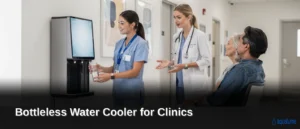
Healthcare facilities adopt advanced systems for infection-control advantages, precise temperature control, and the ability to supply ice for clinical cooling and patient needs. Hygiene features like UV-C, self-cleaning cycles, and touchless dispensing reduce microbial risk in sensitive environments. Maintenance regimes and validation documentation support clinical governance requirements. Selecting robust service contracts and traceable filter-change logs ensures compliance and continuity of care.
How Do Educational Institutions Implement Hydration Solutions with Ice on Demand?
Educational institutions prioritise durable finishes, vandal-resistant designs, and budget-conscious procurement when deploying hydration and ice solutions. Schools often prefer low-maintenance countertop or wall-mounted units with simple filter schedules, while universities may invest in higher-capacity integrated systems for student unions and cafés. Engagement programmes and hydration education encourage student uptake and align with health policies. Durability and clear service plans are essential to minimise downtime in busy term-time usage.
Here is a brief bulleted list summarising sector-specific priorities and recommended features:
- Offices: ease of access, moderate capacity, wellness integration.
- Hospitality: high-capacity ice production, presentation-focused ice types.
- Healthcare: strict hygiene, validation, and service traceability.
- Education: durability, vandal resistance, cost-effective servicing.
These priorities help procurement teams set technical specifications that match sector demands and operational rhythms.
What Are the Latest Trends and Innovations in Water and Ice On-Demand Technology?
Recent trends through 2024–2025 show growing adoption of smart, energy-efficient dispensers, IoT telemetry for predictive maintenance, sustainability-led filter and material design, and improved nugget ice production technologies. Smart scheduling and standby modes reduce idle energy use, while remote monitoring tracks filter life, usage, and faults to prevent downtime. Sustainability innovations include recyclable filter elements and lower-energy compressors. The next subsections review smart energy features, IoT roles, sustainability design shifts, and emerging ice-production technologies.
How Are Smart, Energy-Efficient Dispensers Transforming Hydration Solutions?
Smart dispensers implement scheduling, demand-based standby, and efficient compressor control to reduce energy consumption during low-use periods, which lowers running costs and carbon footprint. These systems can automatically enter low-power modes overnight and resume on business hours, adapting to site patterns. Energy reductions in real deployments often range from modest to significant depending on baseline usage. Buyers should prioritise models with demonstrated savings and configurable schedules for site-specific optimisation.
What Role Does IoT Connectivity Play in Modern Water and Ice Dispensers?
IoT connectivity transmits telemetry such as usage volume, filter life, fault codes, and ice-head performance to remote dashboards, enabling predictive maintenance and fast response to issues. Actionable alerts—filter replacement reminders, bin full warnings, or compressor faults—reduce downtime and improve SLA compliance. Data privacy and secure connectivity are important procurement considerations, and closed, vendor-supported telemetry platforms often provide the best service integration. IoT thus converts passive appliances into managed assets.
How Is Sustainability Driving New Filtration and Dispenser Designs?
Sustainability is pushing manufacturers to design recyclable filters, reduce packaging waste, and lower energy consumption across the product lifecycle. Modular filters that separate recyclable media from housings and lightweight components reduce waste streams. Certifications and eco-labels can guide procurement, and lifecycle assessments give clarity on total environmental impact. Suppliers increasingly offer filter recycling programmes and energy-efficient options that align with organisational sustainability targets.
What Emerging Ice Production Technologies Are Gaining Popularity?
Emerging ice technologies focus on faster nugget production, energy-optimised ice heads, and modular systems that scale production by adding modules rather than replacing entire machines. Improvements in ice-head design reduce energy per kg of ice and provide finer control over ice morphology. Modularity supports staged expansion for growing venues and lowers capital risk. These innovations support both operational agility and energy-focused procurement choices.
For organisations ready to pilot or scale water-and-ice on-demand solutions, suppliers such as Aqualume are available to advise on integrated bottleless water and ice systems and to propose trials that demonstrate hygiene, sustainability, and cost benefits.
A final short invitation: if you would like a consultation or a trial to assess on-site requirements, request a quote or demo from a supplier such as Aqualume to explore tailored water and ice solutions for your facility.