
A bottleless water cooler rental in California runs from $80 a month on a flat-rate plan, up to about $150 for a flagship unit that makes ice as well as cold water. That number is the easy part. The part that decides what you actually spend over a year is how you’re billed — and whether the things that break, wear out, or need replacing are inside the monthly figure or outside it.
Here’s what sits behind the price, what a rental should include, and where the extras hide.
Key takeaways
- Flat-rate is the number that matters. A low headline rate billed per gallon plus service calls plus filter changes is not a low rate.
- Aqualume rentals start at $80/month and include installation, filter changes, sanitization visits and 24/7 support — no separate line items.
- Buying outright costs $1,500–$4,000 per unit before installation, and you inherit every service call after that.
- Southern California’s hard water changes the maintenance math, which is why a plan that bundles service is worth more here than in a soft-water region.
- Month-to-month with a 7-day free trial means the decision is reversible — which is the right way to evaluate a machine your team uses every day.
What you’re actually renting
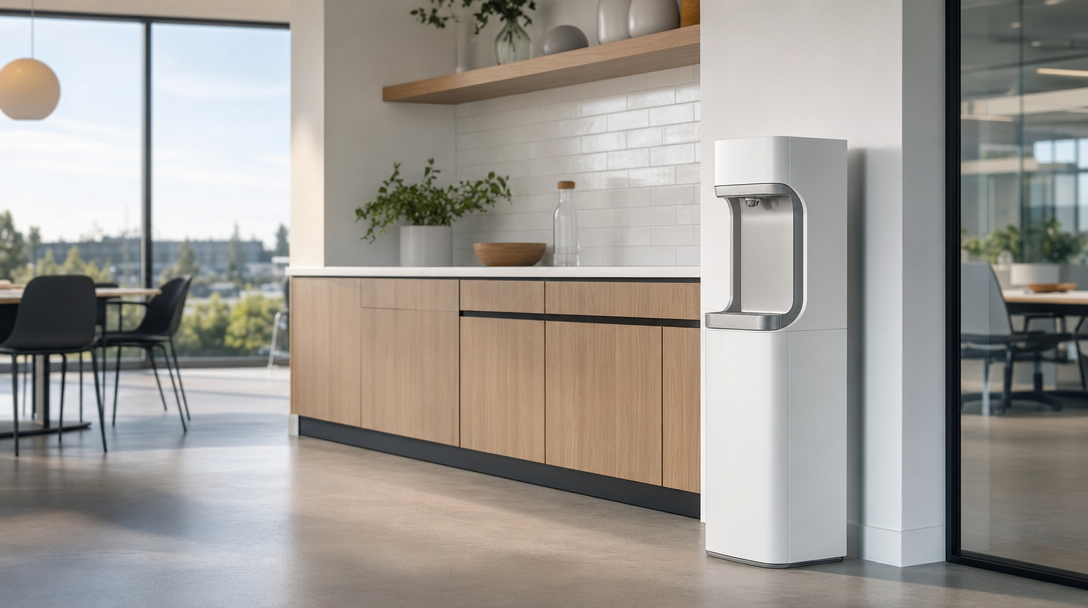
A bottleless cooler is plumbed into your existing water line. There is no delivery, no storage, no jug rotation — the machine filters municipal water on site and dispenses it cold, hot, or as ice depending on the unit.
That changes what “cost” means. With bottled service you’re buying water repeatedly. With a bottleless rental you’re paying for equipment, filtration media, and someone to keep both working. The water itself is already on your utility bill and costs a rounding error by comparison.
So the monthly rate covers four things: the hardware, the filtration system inside it, the labour to service it, and the guarantee that someone answers when it stops working.
Flat-rate versus per-gallon: the billing model matters more than the number
Two quotes can show the same headline price and differ by hundreds of dollars a year.
Flat-rate means one figure, every month, regardless of how much your team drinks. Aqualume prices this way — from $80/month, up to $150/month for the Glacier freestanding ice and water dispenser. Installation is free, maintenance visits are included, and support is 24/7. Budgeting is trivial because the number never moves.
Per-gallon or metered pricing looks cheaper on the quote and moves with consumption. In a 60-person office in August, consumption moves a lot.
The question to ask any vendor is not “what’s the monthly rate” but “what is on my invoice in month seven when the filters need changing and the unit needs sanitizing?” If they can’t answer that in one sentence, the rate isn’t the rate.
What a rental should include — and what usually gets billed extra
| Line item | Included in an Aqualume flat-rate plan | Commonly billed separately elsewhere |
|---|---|---|
| Installation & plumbing connection | Included, free | $100–$300 one-off |
| Filter replacements | Included | Per cartridge, per visit |
| Sanitization visits | Included | Per visit, often annual-only |
| Service calls / breakdowns | Included, 24/7 support | Call-out fee + parts |
| The water | Your utility supply | Per gallon or per jug |
| Contract term | Month-to-month, no contract | 12–36 month lock-in |
| Trial | 7 days, free | Rare |
The right column is where the surprises live. A quote that excludes filters and sanitization isn’t cheaper — it’s incomplete, and you’ll find out which in about six months.
Rent or buy?
A commercial bottleless unit costs $1,500 to $4,000 before installation. Buying makes sense in one specific case: you have a long, stable lease, in-house facilities staff who can handle filter changes and service scheduling, and you’d rather hold the asset.
For most offices, the calculation isn’t really about the purchase price.
Filters don’t fail loudly. They just gradually stop removing what they were installed to remove — which means the failure mode of owning your own unit isn’t a breakdown, it’s a slow decline nobody schedules time to notice.
That’s the real trade. Renting isn’t financing a machine; it’s outsourcing the calendar. If you’ve already landed on renting, our commercial water cooler rental plans start at $80 a month with installation, service visits and repairs covered. We’ve written the full comparison in renting vs. buying a water dispenser if you want to run the numbers against your own headcount and lease term.
What Southern California water does to the math
This region is a hard-water region, and that’s a maintenance fact, not a marketing line. Much of Los Angeles, Orange County and the Inland Empire is served by blended supplies drawn from the Colorado River and the State Water Project — both imported by the Metropolitan Water District of Southern California — and both carry a meaningful dissolved-mineral load. The USGS classifies water hardness by milligrams per litre of calcium carbonate; inland communities generally sit at the harder end of the scale, and some coastal areas run softer.
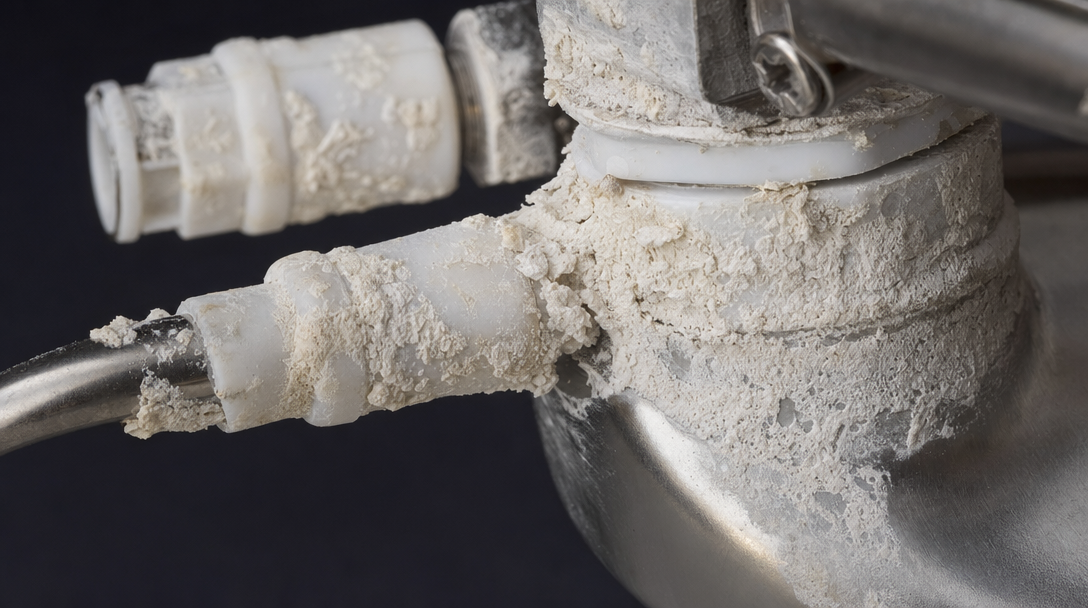
Hard water means scale. Scale builds on cold tanks, in ice-making assemblies, and across heat-exchange surfaces, and it does two things: slows the machine down, and forces the cooling system to work harder for the same result.
Which is why a bundled service plan is worth more here than it would be in a soft-water market. The maintenance isn’t optional; the only question is whether it’s inside your monthly figure or arriving as an invoice.
What the filtration is doing for the money
Municipal water in California is already regulated — the EPA’s National Primary Drinking Water Regulations set enforceable limits on contaminants in public supplies. Filtration at the point of use is not about replacing that. It’s about the last mile: taste, odour, chlorine, sediment picked up in building plumbing, and the dissolved minerals that make SoCal water taste like SoCal water.
Aqualume units run 7-stage filtration. Sediment and carbon stages take the heaviest load and are replaced most often. The reverse-osmosis membrane sits deeper in the chain, protected by everything ahead of it, and lasts considerably longer. The UV stage relies on a lamp whose output degrades over time even while it still visibly glows — which is why UV components are replaced on a calendar rather than on appearance.
When comparing vendors, the useful question is which NSF/ANSI standards a system is certified against — 42 covers aesthetic effects like chlorine and taste, 53 covers health-related contaminants, and 58 covers reverse osmosis systems specifically.
How many dispensers does an office actually need?
Rough planning rule: one dispenser per floor or per 40–50 people, whichever comes first, then adjust for layout. Two things push that number up.
Distance. People don’t walk past two conference rooms for water. A single unit serving a long floor plate gets used like a half unit.
Peak, not average. Break rooms don’t see steady demand; they see everyone at once at 12:15. If your team clusters around lunch or a shift change, size for the peak.
Throughput also drives your service interval. A 60-person office in Irvine burns through filtration media substantially faster than a 12-person practice in Pasadena on identical equipment — which is why interval scheduling belongs with whoever tracks your usage, not with whoever notices the water tasting a little off. If you want a sizing conversation specific to your floor plan, our office water program covers the common layouts.
Switching from bottled delivery
The transition is less disruptive than most office managers expect, but the order matters: get the bottleless unit installed and running before you cancel delivery, so there’s no gap where the break room has no water and everyone remembers whose idea this was.
Check your existing agreement for the notice period and any equipment-return terms — most bottled contracts have both. We’ve written up the process in how to cancel a water cooler contract.
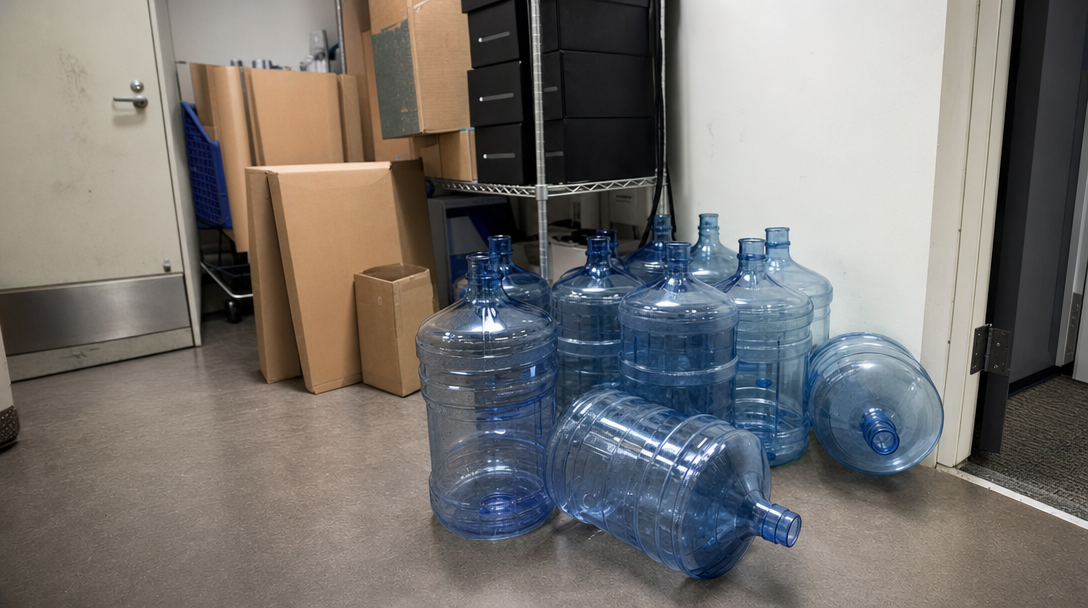
One thing worth planning for: the floor space you get back. A bottled-water office typically keeps a working stack of full jugs plus a growing pile of empties waiting for the next delivery, and both live somewhere — usually a corner of the break room or a storage closet that could be doing something else. That’s not a line on any invoice, but it’s the change people comment on first.
What the first twelve months look like on a flat-rate plan is deliberately boring: the same figure every month, filters changed on a schedule you don’t have to track, and a sanitization visit that happens whether or not anyone remembered to book it. Boring is the product.
Frequently asked questions
How much does a water cooler rental cost per month in California?
Aqualume flat-rate plans start at $80 per month and run up to about $150 per month for the Glacier, which dispenses ice as well as hot and cold water. That figure includes installation, filter changes, sanitization visits and 24/7 support.
Is renting cheaper than buying a water dispenser?
Usually, once service is accounted for. A commercial unit costs $1,500–$4,000 before installation, and ownership means you also own filter replacements, sanitization and every service call. Renting makes sense unless you have a long lease and in-house facilities staff.
Is installation included in the rental price?
Yes. Installation is free on Aqualume plans. A technician connects the unit to your existing water supply, handles the electrical setup, tests the functions and shows your team how it works.
Is there a contract, and how long is it?
Aqualume rentals are month-to-month with no long-term contract. That’s deliberate — it’s useful if you’re in a short lease, a temporary office, or simply don’t want a 36-month commitment to a break-room appliance.
Who changes the filters?
We do, on a schedule set by your actual usage rather than a generic calendar. Your team handles the exterior between visits — the nozzle area, the drip tray, and the surface where cups sit. Ninety seconds. That’s the whole ask.
Can I try it before committing?
Yes. Every new client can start with a 7-day free trial. We install it, your team uses it, and if it isn’t right we remove it at no cost.
Try it for a week
The honest way to evaluate a water cooler is to put it in the break room and see whether people use it. Compare the bottleless water cooler rental options, start a 7-day free trial, or call (833) 426-5863 and we’ll size it for your floor plan first.