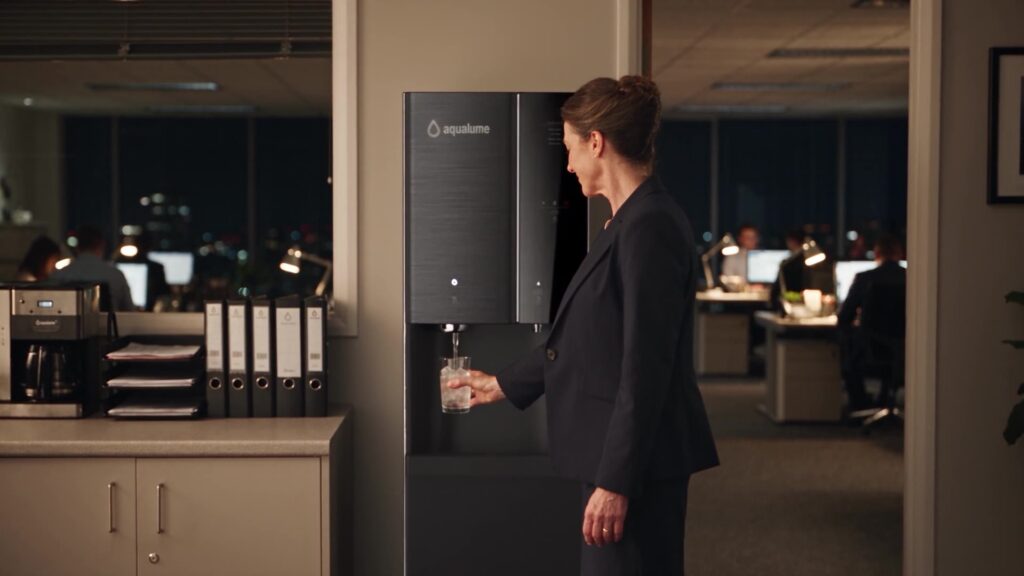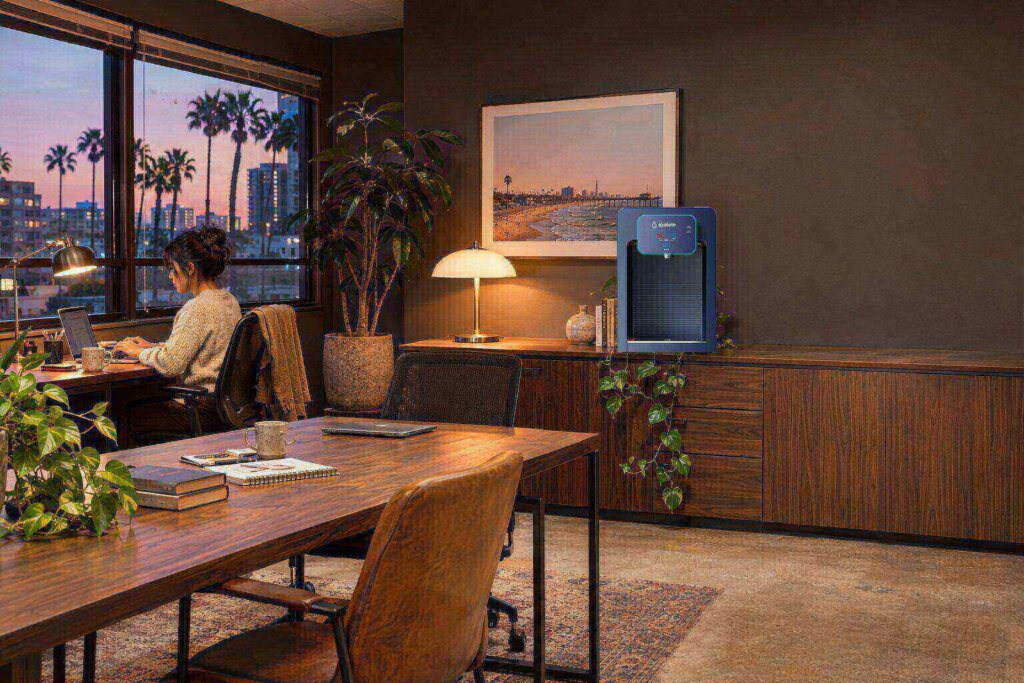
Compact Water Cooler: Ideal for Small Office Spaces
Compact Water Dispensers That Save Space in a Small Office
A small office has little counter, little floor and no spare cupboard for water bottles, but people still need clean water within reach. This guide compares the three ways a small space usually gets it: a countertop bottleless water cooler, an under-sink filter system and a slim freestanding dispenser. We rent the first and the last, to businesses only, across Los Angeles, Orange County and the Inland Empire, and we say so when an under-sink system is the better fit. The checklist near the end helps you find the right small office water cooler for your space.
Which Water Dispensers Take the Least Room in a Small Office?
A space-saving water dispenser takes little room and gives staff filtered water on tap, hot or cold depending on the model. It connects to the building’s water line, so there are no bottles to store, carry or reorder. For a small office the choice is between a countertop cooler, an under-sink system with its own tap and a slim freestanding unit. Each trades footprint against installation work and how many people it can serve. Getting it right keeps water convenient for teams.
Which compact dispenser types suit a small workspace?
Footprint and installation set the types apart. A countertop cooler sits on a counter you already have and needs a nearby water line and a power outlet. Our Lightstream is 11.8 inches wide, the narrowest countertop unit we rent. An under-sink system hides its hardware in the cabinet and uses its own tap, which saves visible space but needs cabinet room. A slim freestanding tower such as the Gulfstream, also 11.8 inches wide, stands on the floor where a counter will not take it. For each, check the water line, the room a technician needs and the noise before you settle on a spot.
How bottleless coolers save space
A bottleless cooler connects to the building’s water line, so there are no crates to store and no heavy bottles to lift. The water passes through filtration stages before it reaches the tap. In ours that means seven: sediment, pre-carbon, an RO/UF membrane, pH balance, sanitization, nutrient boost, and a taste and odor polish. Without bottles you save the storage corner, and with fewer hands on the equipment the dispense area is easier to keep clean. That is why bottleless water coolers suit small offices that want less to look after.
Why a tabletop cooler suits a small office
Tabletop coolers go on an existing counter, so there is little to install and the unit can move if the office layout changes. Our Jetstream is a tabletop model with a tower option, serving hot, cold and ambient water. A tabletop sits where people already gather, such as a kitchenette, so it takes no floor space. Check the water line and an outlet before you choose the spot, and tell us how many people will use it so we can suggest the right model.
Here is how the device types compare for small-office suitability:
| Device Category | Typical Footprint & Installation | Our models | Ideal Small-Office Use |
|---|---|---|---|
| Countertop bottleless water cooler | Sits on a counter; needs a water line within reach and a power outlet | Lightstream, Jetstream, Blizzard | Desk clusters, compact kitchens |
| Under-sink water filtration system | Hidden under the sink with its own tap or connector | Not something we rent | Micro-kitchens, single-room offices |
| Slim freestanding dispenser | Floor tower; the Gulfstream is 11.8 inches wide; needs a water line and power | Gulfstream (slim); Cascade and Glacier are larger | Higher-use small offices, shared spaces |
Comparing quotes?
Get Aqualume's price for your office in one call.
Plans from $80/mo*. Seven models, one 7-stage filtration system, service across LA, Orange County and the Inland Empire.
How Under-Sink Water Filters Work
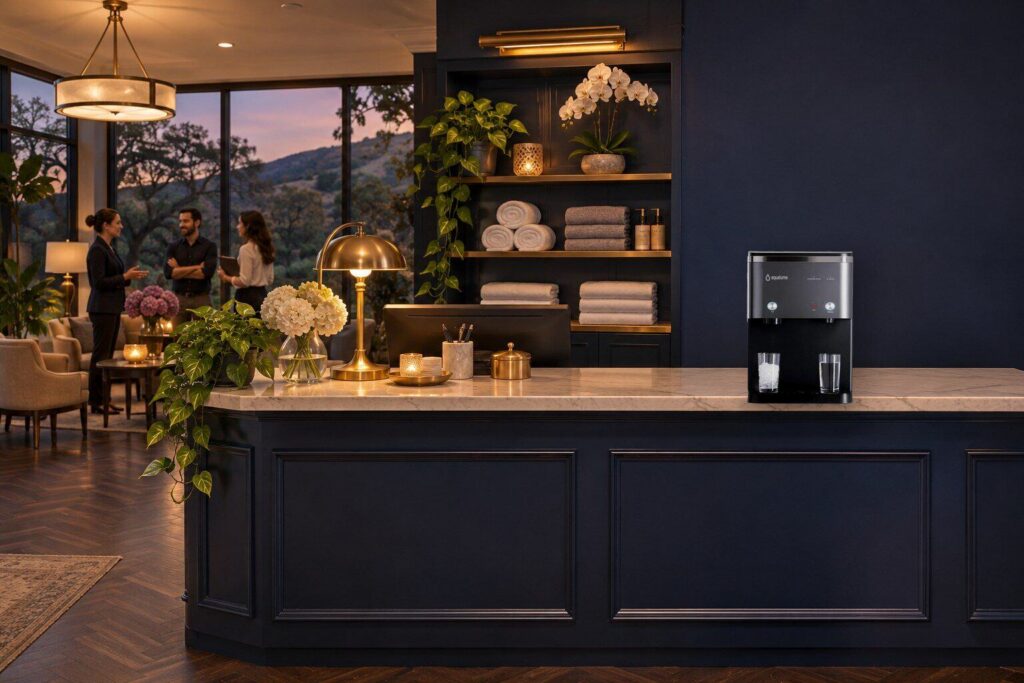
An under-sink system treats the mains water inside the cabinet and delivers it through a separate tap, so the equipment stays out of sight. The water usually passes a sediment filter and a carbon filter, and some systems add a membrane stage, before it reaches the tap. The benefit for a small office is a clear counter. The trade-offs are cabinet space, cartridge changes and checking that the fittings suit your plumbing. We do not rent these, and if your counter is already clear, a plumber can advise. If you want hot water too, a properly sized dispenser does more than a basic under-sink tap.
What to look for in an under-sink filter
When you compare systems, look at the filter stages, the flow rate, how easy it is to change cartridges and whether the housing can be reached without moving anything. Activated carbon takes out chlorine and improves taste, and a membrane stage removes dissolved solids. Quick-change cartridges matter in a small office where nobody has spare time. Ask which filtration standards the system is certified to, so its performance is predictable for workplace use.
Installing and maintaining an under-sink system
Installing an under-sink system means shutting off the cold feed, fitting a tee, mounting the filter housing in the cabinet and adding a tap to the counter or sink. A confident DIYer can manage it, but a plumber protects your warranty and your connections. Maintenance is mostly cartridge changes and wiping the tap, and cartridge life depends on use and on the quality of your water. Plan where the housing goes so you can reach it, and note the change dates somewhere visible.
Pros and cons of under-sink filtration
An under-sink system has clear advantages: the equipment is hidden, supply is continuous and the water tastes better than most basic dispensers. The costs are cabinet space, plumbing work that disrupts the office and cartridges you have to remember. Choose it when counter space is the problem and the team wants discreet, continuous filtration. Choose a dispenser when you want hot water, no maintenance of your own, or someone else to service it.
Why a Mains-Fed Compact Dispenser Can Suit a Small Office
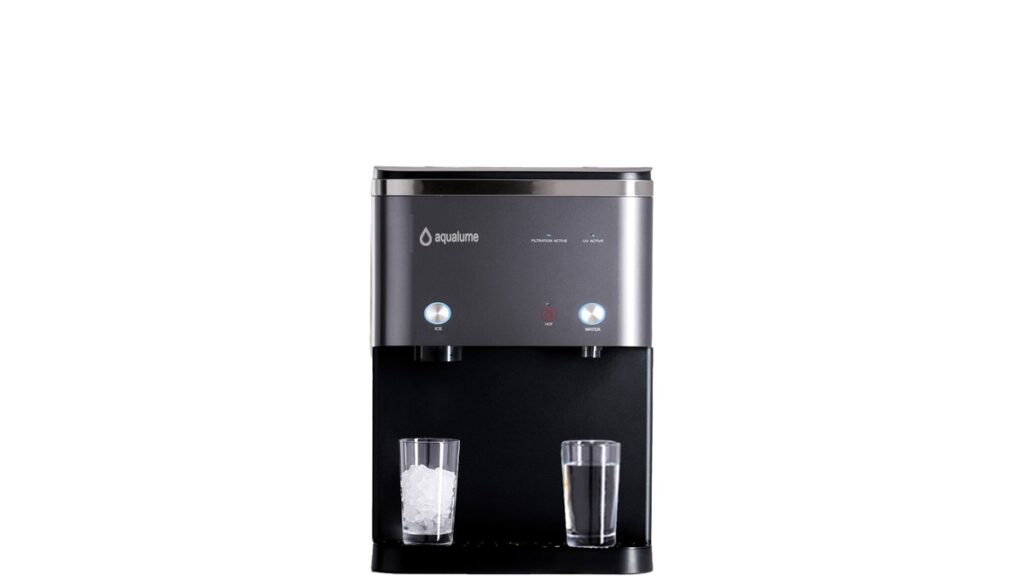
Mains-fed water dispensers connect to the building supply and give you water on tap, hot or cold depending on the model. They suit offices that want no bottles at all. The compact versions come as countertop units or slim towers, so you trade a little installation effort for convenience every day. The gains are no bottle delivery, no stock to store and no single-use plastic. For a small office that frees a cupboard.
Lower costs and less plastic
Bottled water means a recurring order, delivery fees and someone to carry and store the bottles. A bottleless cooler removes all of that and replaces it with a monthly rental. Count the bottles you use per month and the time spent handling them, then compare that with the rental price. The plastic you stop buying also supports workplace CSR goals, and you can report it as bottles avoided per year.
- No recurring bottle orders or delivery fees to manage.
- Less storage space and less lifting for staff.
- No single-use bottles, which helps with any sustainability targets you report.
Put those together with the footprint and you can start to narrow down a model.
Compact models that fit a tight space
For tight spaces, look at size first. The Lightstream is a countertop cooler 11.8 inches wide, and the Gulfstream is a freestanding tower of the same width that weighs 59 lbs, the lightest freestanding unit we rent. Both give hot and cold water. Check that a technician can reach the unit and that the noise suits your room. Our FAQ on placement and setup covers open-plan and quiet rooms.
Hot and cold water in a small office
Hot and cold water suits an office that makes tea, coffee or instant meals, and people use the cooler more when hot water is on offer. Hot water draws more power than cold, and every water model we rent heats water, so the question is whether that draw is acceptable to you. If hot drinks are part of the day, a compact hot and cold unit such as the Lightstream or Gulfstream is worth the extra power for the gains in convenience. Put the hot tap where nobody walks past it with a full cup.
How to Choose the Right Space-Saving Water Solution
In practice the choice comes down to space, headcount, the nearest water line and budget. Measure the spot, count your daily users and note the nearest water connection and outlet. Most mistakes come from a unit that is too big for the space or too small for the team, which is why a checklist beats guessing. The next section breaks the checks down. We work with small offices across Southern California and will help you check them.
What should decide your choice?
Measure the usable counter depth and height so the cooler does not block your workflow, and check the cabinet depth if you are considering an under-sink unit. Estimate daily use from headcount and see whether a single countertop unit will keep up. Then decide how much you care about hygiene features such as touchless dispensing, and whether you want someone else to handle the servicing.
- Measure the space and find the nearest water line and outlet.
- Estimate how many people will use it and when the queue peaks.
- Decide whether touchless dispensing matters and who will service it.
Once the space and the headcount are settled, power use and hygiene are the next two checks.
Energy use
Most of a cooler’s electricity goes to cooling and heating the water, and a unit that sits idle most of the day still uses some. Hot water draws more than cold, so if your team rarely drinks hot drinks, that is where you save. Check the rated power of the unit you are considering and think about how long it will sit between uses. Add the running cost to your comparison, not only the monthly rental price.
Hygiene and touchless dispensing
Fewer hands on the equipment keeps a shared kitchen cleaner. The Lightstream is touchless, so nobody presses a button, and in any bottleless cooler the water runs from the line to the tap without anyone handling a bottle neck. A drip tray that lifts out is easy to wipe. These features help most where desks are shared and many people use one tap. They reduce handling, but they do not replace wiping the tap down.
Installation and Upkeep for Compact Dispensers
Good installation sets up long-term performance. The unit needs a safe power outlet, a water connection and clear space so a technician can reach the panels. A tap placed away from walkways keeps spills down. On our plans installation is free and done by our technicians, and scheduled service keeps the filters and sanitization on track. Treat upkeep as part of the decision, not an afterthought.
Installing a bottleless or under-sink system
For an under-sink system, the steps are checking pipe size and pressure, shutting off the feed, fitting a tee or a dedicated supply, mounting the housing and checking the electrical connection if there is one. You will need an adjustable spanner, thread tape, a drill if the tap needs a hole, and isolation valves. Flush new filters as the maker instructs and sanitize before first use. If plumbing code or the warranty requires it, use a plumber. For a countertop or tower cooler from us, none of this is yours to do.
Filter changes and cleaning
Upkeep depends on the system. For an under-sink unit, replace sediment and carbon cartridges about every 6 to 12 months, change a membrane every 12 to 24 months if it has one, and wipe the tap and drip tray weekly. A monthly look at the filter indicator and a short log tell you when something is overdue, and reduced flow, a change in taste or visible deposits are the warning signs. Put a service reminder in your calendar. With our plans the machine itself needs none, because scheduled service is included.
- Under-sink carbon cartridges: usually every 6 to 12 months.
- Membranes: every 12 to 24 months, if the system has one.
- Drip trays and nozzles: wipe weekly so residue does not build up.
Stay on those schedules and the water keeps tasting the same.
Keeping performance up over time
If nobody in the office wants the job, renting takes it off your hands. Our service plans include scheduled visits, repairs and the machine, so there is nothing to track in a spreadsheet. Replacement filters are billed separately, about once a year. Whoever does the cleaning, name one person to notice a drip or a slow flow and call us. Support runs Monday to Friday, 8 AM to 5 PM, and we commit to being on site within 2 business days.
Free 7-day trial
Try a bottleless cooler in your office before you sign.
- 7-day free trial, we take it back if it isn't right
- Plumbed in: no jugs to lift, store or reorder
- A local technician, not a national call centre
Rather talk? (833) 426-5863
*Starting price; final pricing depends on the machine and site.
What Better Water Does for a Small Office
Water that is easy to reach and tastes good gets drunk; a cooler down the hall gets skipped. One reviewer wrote, “Never drank this much water at work” (tina midourian, Google review). That is one office’s report, not a productivity study, so read it as part of the business case for a cooler.
Hydration and the working day
Hydration needs vary by person, so we will not hand you a number. A practical way to see whether a cooler is working is to ask staff whether they drink more, and to watch how often it is used. Over a few months you can set that beside what you spent on bottles. Placing the water dispensers near where people already stop, such as the kitchen or a meeting room, makes the difference.
Hygiene and wellness
A bottleless cooler keeps the water in a closed line from the supply to the tap, and nobody handles a bottle or a cap. Touchless dispensing, on the Lightstream, goes a step further for shared desks. Cleaner surfaces matter most in an office where many people use the same tap. Fewer touchpoints and an easy-to-wipe tap are the realistic gains.
Sustainability
Without bottle deliveries there are fewer trucks, fewer plastic bottles to recycle and less to carry out of the office. Count how many bottles you used last year and you have a figure to report. You also lose the stack of empty bottles in the corner.
| Hydration Intervention | Benefit | What you can measure |
|---|---|---|
| Bottleless cooler | Water within reach and no bottles to handle | Bottles no longer ordered; how often staff refill |
| Under-sink tap | Filtered water out of sight | Taste feedback from staff |
| Hot and cold dispenser | Hot drinks and cold water from one spot | How often the hot tap is used |
What Compact Water Dispensers Cost
Cost has three parts: what it takes to get the machine, the recurring supplies and service, and the hidden costs such as storage and the time spent handling deliveries. Bottled water has a low start and a recurring bill that grows with use. A bottleless cooler on rent replaces that bill with one monthly plan covering the machine, installation, scheduled service and repairs. The table lists the cost components for each approach.
| System Type | Cost Component | What to compare |
|---|---|---|
| Bottled delivery system | Delivery fees, bottles, storage and handling time | Your own invoices |
| Bottleless rental | Monthly plan; filters billed separately, about once a year | Plan and term confirmed in writing |
| Under-sink filtration | Cartridges and the occasional plumber | Who does the upkeep |
Bottleless versus bottled: the full cost
Compare like with like. For bottled water, add up delivery fees, bottle deposits, the storage space and the minutes spent moving bottles. For a bottleless cooler, add the monthly plan, filters and electricity. There is no break-even figure that fits every office, because it depends on how many bottles you use now. Send us an invoice and we will put it next to a plan quote. A heavier bottle habit tips the comparison toward a cooler faster.
What a rental plan covers
Aqualume rents only. A rental plan covers the machine, installation, scheduled service and repairs, and replacement filters are billed separately, about once a year. Plans start at $80 a month per dispenser*, and the term is set for your site and confirmed in writing. We do not sell machines, so the comparison that matters is a rental against bottled delivery. *Starting price; final pricing depends on the machine and site.
- Rental: one monthly plan covering the machine, installation, service and repairs.
- Bottled delivery: a low start, then a recurring bill that grows with use.
- Choose rental if you do not want to maintain a machine yourself.
That trade-off matters most in an office with tight cash flow or a short lease, where a large upfront payment is hard to justify.
Energy and filter costs
Cooling and heating use most of a dispenser’s power, so check the rated draw. Filters are a small recurring cost, though membranes cost more than carbon cartridges and last longer. With a rental, scheduled service and repairs are in the plan and replacement filters are billed separately, about once a year, so the line to watch is your electricity. Place the unit away from heat sources so it does not work harder than it has to.
That covers device types, installation, upkeep, hygiene and cost for a small office. For offices in Los Angeles and beyond, see our office water plans, or start the 7-day free trial. A site visit is part of it.